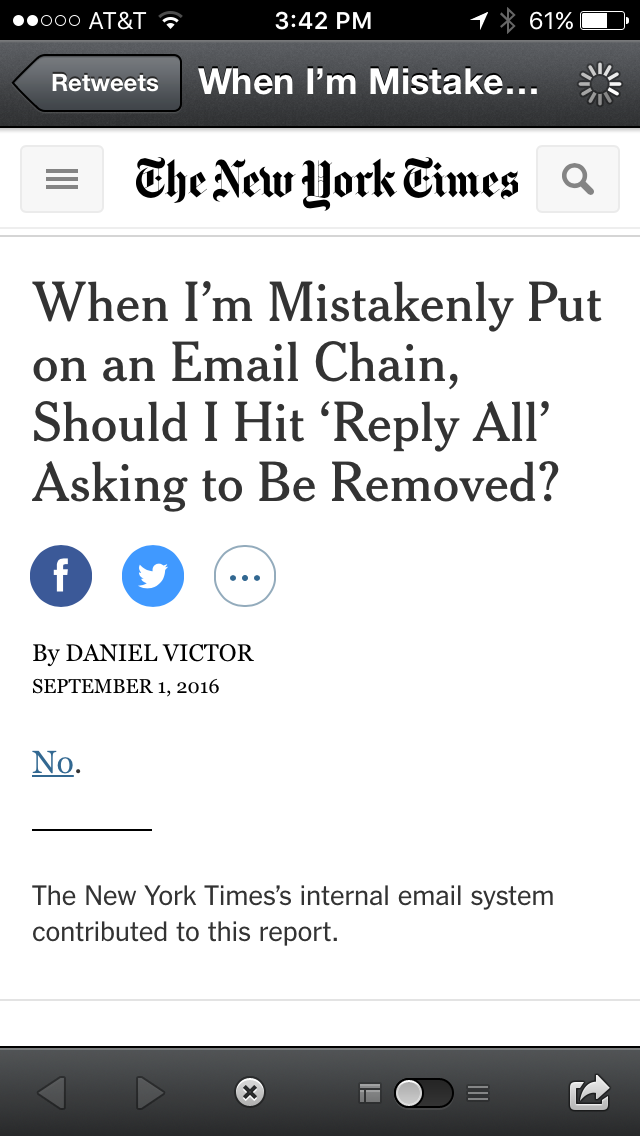
NY Times on unsubscribing by email
IMG_2100
More than a decade ago I was included in one of these. It wasn’t work related per se, but the address list included a lot of experienced, BTDT, names-on-RFCs technology folks.
Yeah, even they got stuck in the mess of replying all, unsubscribing, lecturing people about not replying to all. It was a mess, but funny given the names involved. #neverdothis #noreplytoall
Related Posts

Doing it right

It’s that time of the year – marketers send more email than usual, recipients unsubscribe from their lists.
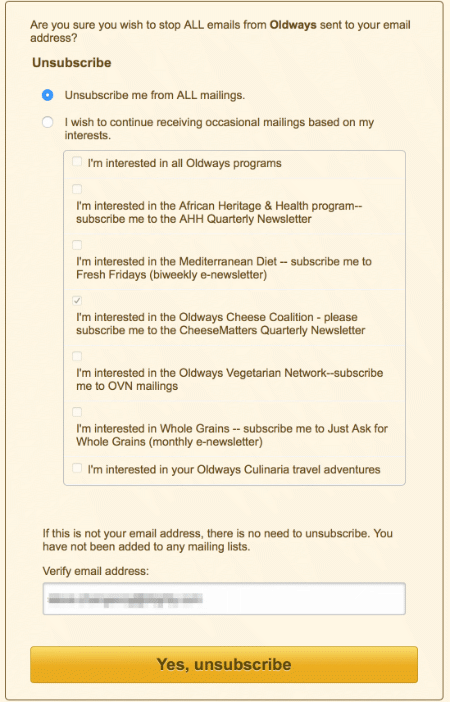
Clicking on the unsubscription link in the email I just received took me to an unsubscription landing page. The box for my email address was prepopulated based on the cookie in the unsubscription link, the default setting is to unsubscribe me from all mail from the sender and just clicking the sole button on the page will unsubscribe me.
It offers me an alternative to unsubscribing from everything – letting me receive just the content I want. It does that immediately on the unsubscription landing page (rather than suggesting I go to a subscription center or, worse, requiring I click on a different link in the mail originally). And it tells me the important things about the newsletters I might want to subscribe to – what they’re about and how often they’re sent.
oldways
This isn’t anything particularly special, but sometimes it’s nice to highlight someone who is doing it right.

Read More

October 2015: The month in email

When you spend most of your day working on email and spam issues, it starts to cross into all aspects of your life. In October, I was amused by authors who find names in spam, SMTP-related t-shirts on camping trips, and spam that makes you laugh. Maybe I need a vacation?
We were quite busy with conference presentations and client work this month, but took time to note the things that captured our attention, as always. We highlighted a few things we enjoyed reading around the web: Brian Krebs’ Reddit AMA, the results of Jan Schaumann’s survey on ethics in internet operations, and a great post on Usenet from Joe St. Sauver.
In industry news, we covered a few glitches that are worth noting, in case you missed them: Yahoo FBL confirmation emails, Google postmaster tools, Network Solutions email, and weird Lashback listings. Even though these have mostly been resolved, it’s useful to keep track of the types and frequency of these sorts of issues, as they can significantly impact your deliverability and may be useful as your clients or business stakeholders raise questions about campaign performance.
Steve contributed a few key technical posts this month, including a short post on IPv6 authentication issues, following up on the issues he outlined back in July. He also noted Gmail’s upcoming move to DMARC p=reject, which is notable for the ways they are are looking to mitigate risks with their ARC proposal.  Finally, he wrote that it’s worth looking at false positives every now and then, as it can reveal interesting patterns in the ESP landscape.
Finally, a good suggestion from the best practices file: engagement through confirming user names, and a not-so-good plan for an app that’s sure to invite abuse and harassment.

Read More